
8 Steps for Modern Businesses
The MSP you choose in 2026 will shape far more than day-to-day IT operations. It will influence how securely your people work, how quickly your business can adapt, and how much value you actually get from the platforms you already own.
The challenge is that much of the MSP market hasn’t evolved at the same pace as the modern workplace. Some providers are still anchored to legacy infrastructure and operating models, while others are built around identity, cloud, and endpoint-first strategies.
Here are eight steps to help you separate the two and choose an MSP that’s ready for what’s next.
1. Start with Identity
In 2026, identity is the control plane. If an MSP still leads with servers, networks, or VPNs, they’re starting in the wrong place. Modern environments are built around identity-first access, where trust is evaluated continuously based on who the user is, what device they’re on, and the context of the request.
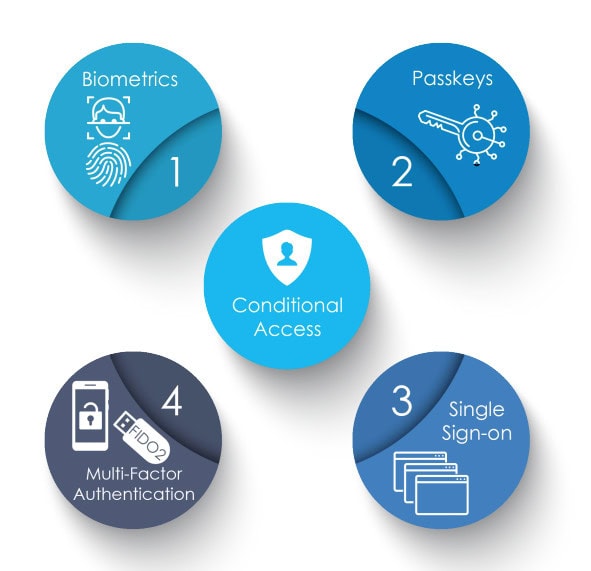
The right MSP should be fluent in Microsoft Entra and able to design identity experiences that are both secure and seamless. That includes biometric sign-in and passkeys to eliminate password risk, single sign-on to reduce friction across applications, and strong MFA that adapts to risk rather than interrupting users unnecessarily.
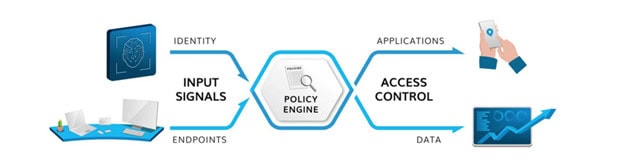
Just as important is how those signals come together. Conditional access policies should dynamically enforce the right controls based on identity, device health, location, and behavior. Done well, users barely notice security at all. Done poorly, it becomes a daily source of frustration.
A modern MSP understands that identity isn’t just about logging in. It’s how users access apps, how devices earn trust, and how data stays protected without slowing the business down.
2. Look for a Security-First, Zero Trust Mindset
Security can’t be bolted on after the fact. Modern MSPs design environments assuming risk is constant. That means Zero Trust principles embedded across identity, endpoints, and data.
If the conversation still centers on perimeter defenses alone, that’s a sign the provider may be operating with yesterday’s assumptions.
3. Evaluate Their Endpoint Management Strategy
A modern MSP should have a clear, opinionated approach to endpoint management using Microsoft Intune or similar solution. This includes secure onboarding, policy-driven configuration, automated remediation, and support for diverse device types without sacrificing control.
If device management feels manual, reactive, or dependent on multiple third-party tools, that’s a red flag in 2026.
4. Ask How They Deliver Support in a Modern World
Support in 2026 should feel seamless, not transactional. The right MSP blends automation, telemetry, and human expertise to prevent issues before users ever notice them. When support is needed, it should be fast, contextual, and designed around the employee experience.
Modern support is proactive, identity-aware, and deeply connected to endpoint and security insights.
5. Ask How They Onboard Employees
Employee onboarding is one of the clearest signals of how modern an MSP really is.
If onboarding still relies on device imaging, manual setup, or IT handling hardware before a user ever signs in, that’s a legacy approach hiding in plain sight. In 2026, onboarding should be identity-driven, automated, and repeatable.
A modern MSP should be using zero-touch provisioning so new employees can receive a device, sign in with their identity, and be productive within minutes. Tools like Windows Autopilot with Microsoft Intune make this possible by enforcing security policies, applications, and configurations automatically, without IT ever touching the device.
Ask how quickly a new hire can be fully onboarded, how consistent that experience is across roles and locations, and how security is applied from the very first sign-in. The answers will tell you a lot about whether the MSP is built for scale or stuck maintaining old habits.
6. Look for Simplicity, Not Tool Sprawl
More tools don’t necessarily equal better outcomes. Ask how the MSP helps customers rationalize their stack and make the most of existing licenses. Providers still tied to traditional models may be incentivized to add tools rather than simplify.
A modern MSP should be comfortable reducing complexity, consolidating capabilities, and helping you unlock value from investments you already have.
7. Assess Their Ability to Evolve
Your MSP should have a clear process for staying current, adapting architectures, and guiding customers through change. If updates feel reactive or ad hoc, that’s a sign the provider may struggle to keep up in a cloud-first world. In 2026, adaptability is foundational.
8. Focus on Business Outcomes
Finally, shift the conversation to results.
The right MSP talks about reduced risk, improved adoption, fewer disruptions, and stronger security posture. They understand that IT success is measured by how well people can work, not just how systems perform.
Choosing an MSP Built for the Modern Workplace
Finding the right MSP in 2026 means looking beyond traditional infrastructure models and toward partners built around identity, security, endpoint management, and experience.
The most effective MSPs are helping businesses move forward securely, efficiently, and ready for whatever comes next.


Andrew Reade
Andrew is our Digital Marketing Manager and oversees web-based marketing strategies and content creation for the organization. As a marketing veteran, Andrew has worked with organizations of all sizes in a diverse group of industries, from Risk Management to Transportation. Joining the organization in 2021, Andrew is based in Mobile Mentor’s Nashville, TN office.