
How confident are you that your employees can't find sensitive company information with AI?
Because if you're not sure, there's a simple test you can run in the next 15 minutes that might tell you more about your business' AI readiness than months of meetings, strategy documents, and governance discussions.
Many businesses are investing heavily in AI assistants, copilots, and agents. At the same time, they're asking important questions about governance, security, compliance, and risk.
But before you worry about what AI might do in the future, it's worth understanding what it can already see today. AI inherits access controls and all the data security practices that are in place or not in place
The reality is that AI doesn't create data security risks. It exposes them.
If sensitive information is already accessible to the wrong people, AI simply makes that information faster and easier to find.
The 15-Minute AI Readiness Test
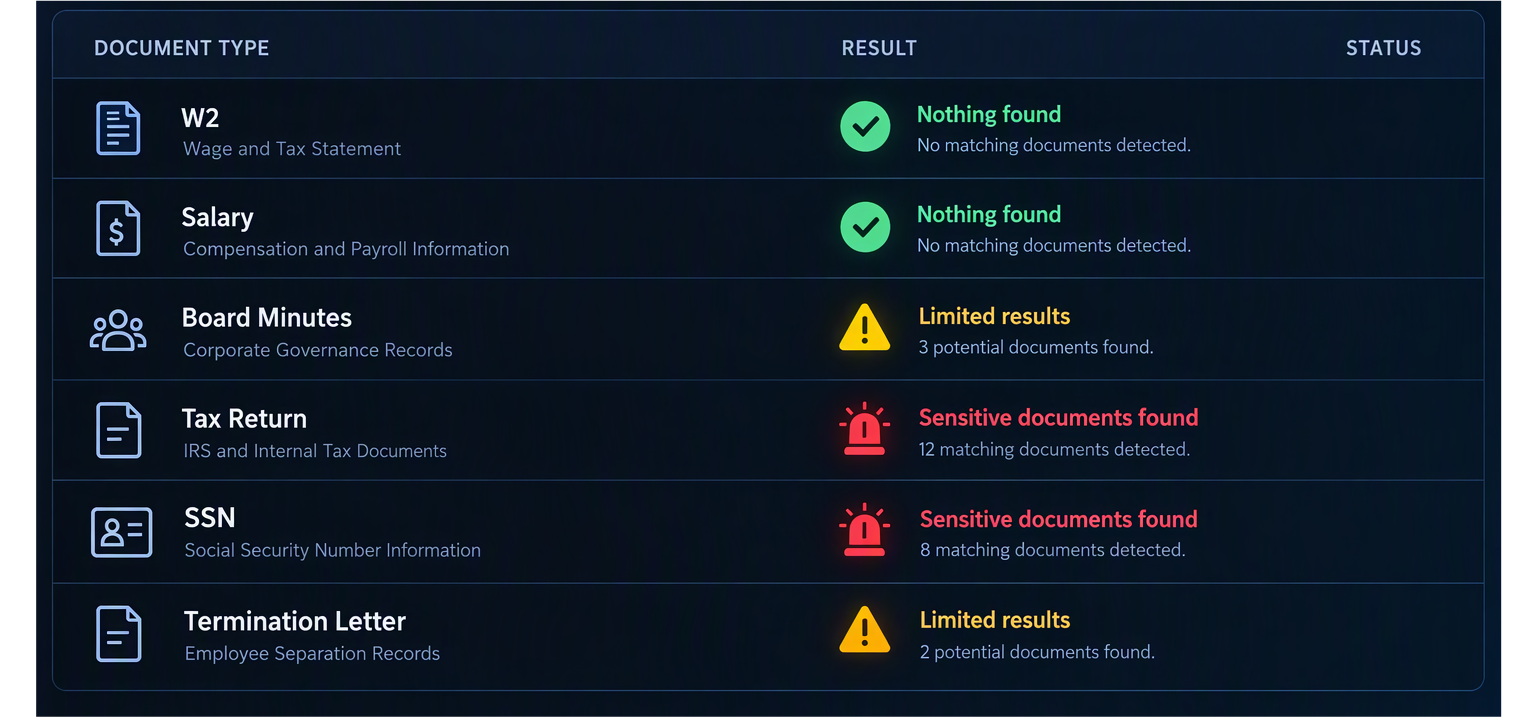
Open your preferred AI tool and search for these terms one by one:
- 1W2
- 2Social Security Number (SSN)
- 3Offer Letter
- 4Termination Letter
- 5Performance Improvement Plan
- 6Board Minutes
- 7Investment Proposal
- 8Bank Statement
- 9Performance Review
- 10Tax Return
- 11Salary
- 12Promotion
- 13Redundancy
- 14Reduction in Force
- 15Internal Investigation
Don't overthink it.
Just search.
Then pay close attention to the results.
AI Is a Mirror
One of the most interesting things about AI is that it acts like a mirror.
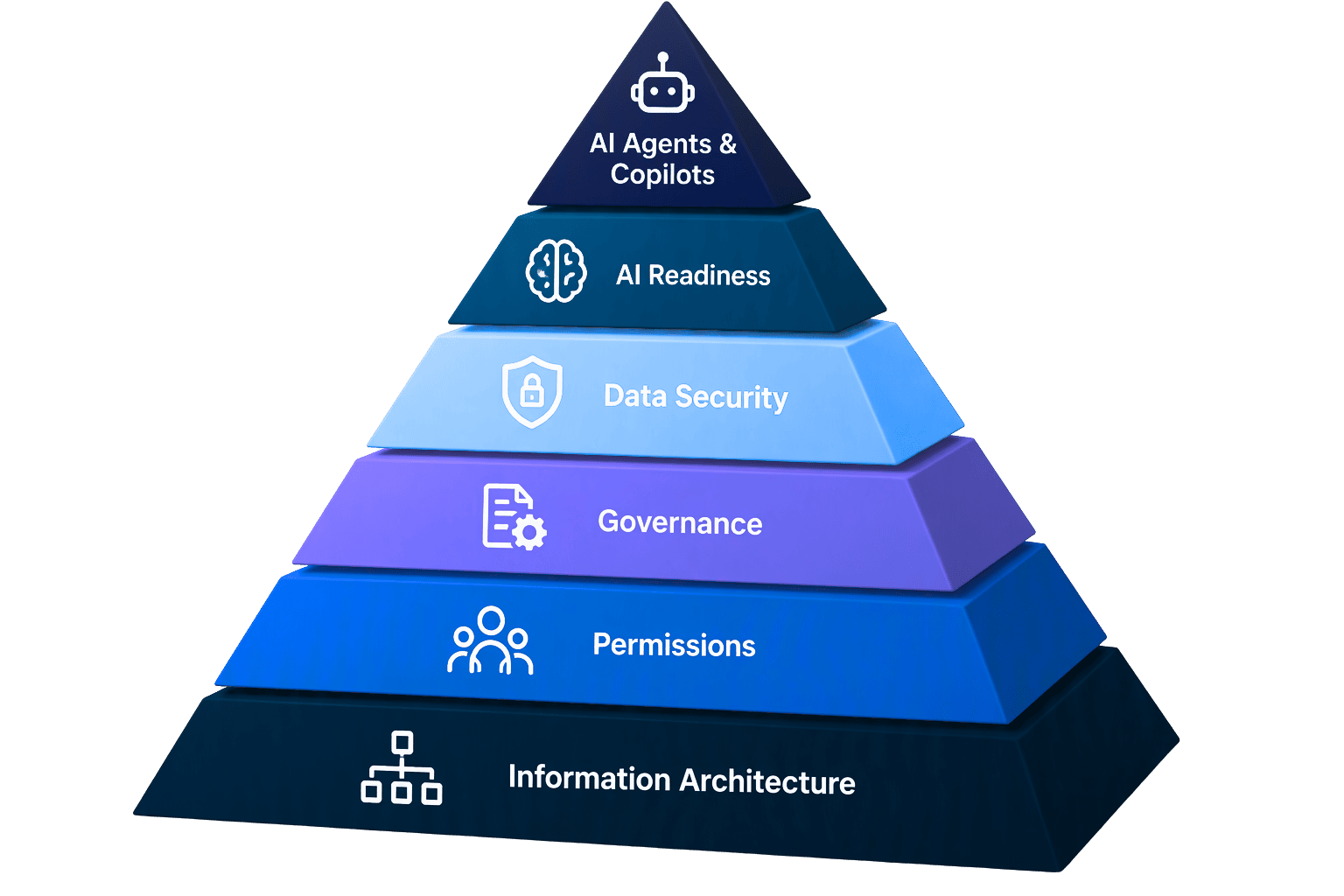
It reflects the quality of your information architecture, permissions model, governance practices, and data security controls.
Businesses with strong foundations generally have a strong AI experience. But those with weak foundations discover problems very quickly.
The difference is that those problems were already there.
AI simply makes them impossible to ignore.
There Is No AI Without IA
I've said many times that there is no AI without IA.
IA stands for Information Architecture.
As AI agents become more capable and autonomous, information architecture becomes more important, not less. The future of AI depends on how organizations manage information, permissions, governance, and trust. The companies investing in Information Architecture today will be the ones that move fastest tomorrow.
The businesses that get the most value from AI won't necessarily have the best prompts or the newest models.
They'll be the businesses that can answer fundamental questions:
What To Do Next
If you ran this test and everything looked perfect, congratulations. You're in a better position than most.
If the results made you uncomfortable, that's valuable too.
You've identified a problem before an employee, auditor, regulator, or AI agent found it for you.
The answer isn't to slow down AI adoption. The answer is to strengthen the foundation underneath it.
Because the businesses that succeed with AI will be the ones that make data both more secure and more accessible at the same time.
That balance is becoming one of the most important leadership challenges of the AI era.
AI doesn't create data security issues. It exposes them. The question is whether you discover them first.
- 1Detect: Find Oversharing in SharePoint Online – SharePoint Advanced Management capability
- 2Detect: Discover Sensitive Data in your environment – Purview
- 3Detect: DSPM for AI – Purview
- 4Protect: Exclude Copilot from known Sensitive Sites
- 5Protect: Data Loss Prevention
- 6Data Governance and Classification Effort
- 7Copilot pilot
AI doesn’t create data security issues. It exposes them. The question is whether you discover them first.