
Co-managed IT means different things to different businesses. For some, it’s extra hands to keep up with day-to-day operations. For others, it’s about gaining expertise, reducing risk, or finally modernizing an environment that’s grown stale or too complex over time. The right co-management model depends less on company size and more on where you are in your maturity, capability, and confidence.
If you’re exploring co-management, it’s worth stepping back and asking not just “what help do we need today, but what do we expect this partnership to leave us with tomorrow?”
Co-Management by Business Type and Need
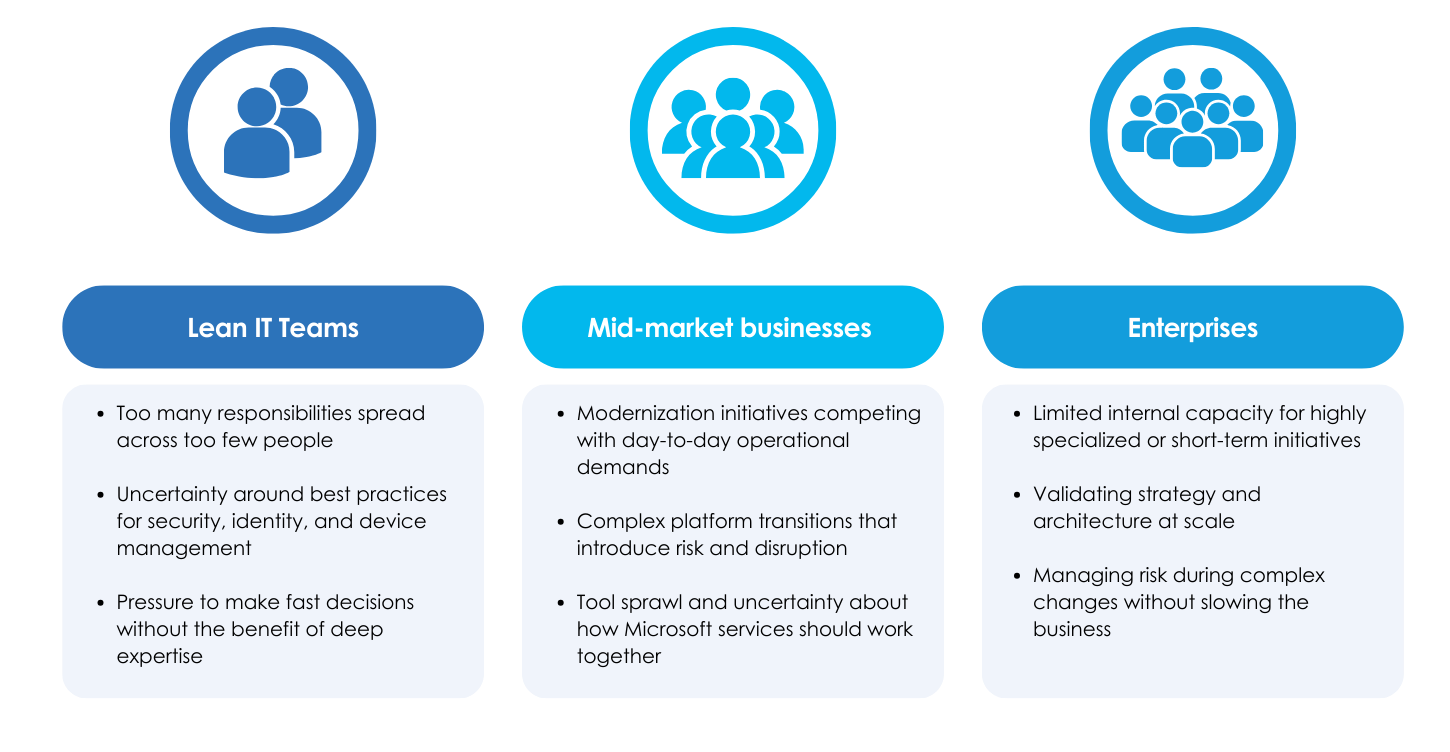
Lean IT teams and growing businesses
Smaller teams often look to co-management to extend capacity. They may have one or two IT generalists managing endpoints, identity, and security alongside many other responsibilities. In these cases, co-management is expected to bring structure, best practices, and reassurance. In other words, someone who can help them make the “right” decisions the first time, without slowing momentum.
Mid-market businesses under pressure to modernize
These teams often have solid operational coverage but struggle with transitions: moving to Intune, tightening identity controls, rolling out Zero Trust, or enabling secure hybrid work. Their expectation of co-management is acceleration (progress without disruption) and a partner who understands how Microsoft’s ecosystem fits together in the real world.
Enterprises with established IT functions
Larger businesses typically don’t need someone to “run IT” for them. Instead, they expect co-management to deliver depth: specialized expertise, validation of strategy, and support during complex initiatives.
Across all of these scenarios, one expectation remains consistent: co-management should make teams stronger, not more dependent.
What Companies Expect from Co-Managed IT
At its best, co-management delivers:
But not all co-management models deliver on those expectations.

Where Weaker Co-Management Models Fall Short
Many co-managed offerings lean heavily toward operational support. They keep things running, but don’t always move things forward. Common gaps include:
Over time, these gaps can create friction. Teams feel dependent. Progress slows. And co-management starts to look more like outsourced IT, without the strategic upside many leaders expected.
Mentoring: Co-Management, Raised a Level
This is where Mobile Mentor’s Mentoring Service changes the equation.
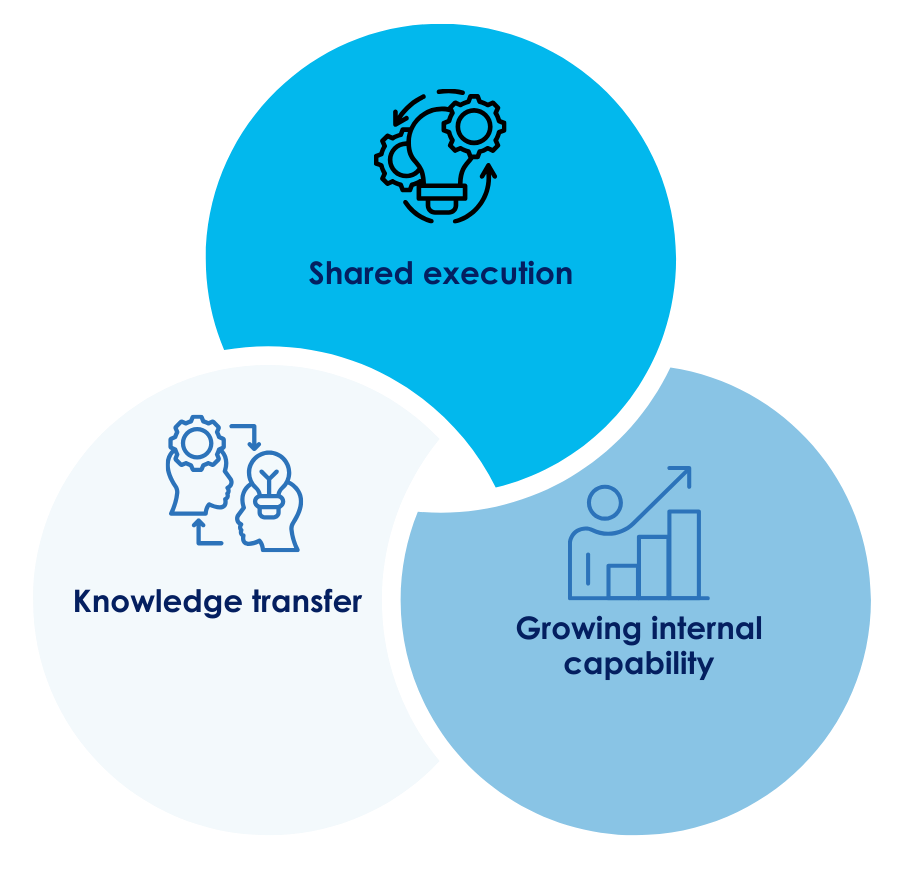
Hand-in-hand Mentoring is best thought of as “co-managed IT plus”. It combines shared responsibility with deliberate capability building, so every engagement leaves your team better equipped than when it started.
Instead of working for your team, a Mobile Mentor expert works with them:
Hand-in-hand Mentoring covers the full lifecycle, from assessment and planning to implementation and optimization. But the defining difference is knowledge transfer. Every decision is explained. Every configuration is intentional. And every engagement is designed to stick.
What Hand-in-Hand Mentoring Delivers That Traditional Co-Management Doesn’t
This is especially powerful for modern endpoint management, identity, security, and Microsoft cloud services, where tooling moves fast and “set it and forget it” no longer applies.
If your primary goal is operational relief, traditional co-management may be enough. But if you’re looking for momentum, mastery and progress today that leaves your team stronger tomorrow, Mentoring offers a different path.
For businesses navigating modernization, Mentoring is the partnership, acceleration, and enablement you need. rolled into one.
LEARN MORE ABOUT MENTORING SERVICES
Contact a Mobile Mentor expert today

Andrew Reade
Andrew is our Digital Marketing Manager and oversees web-based marketing strategies and content creation for the organization. As a marketing veteran, Andrew has worked with organizations of all sizes in a diverse group of industries, from Risk Management to Transportation. Joining the organization in 2021, Andrew is based in Mobile Mentor’s Nashville, TN office.