
The future of work is not being shaped by a single technology trend. It is being reshaped by changing employee expectations, accelerating AI adoption, and growing tension between governance and productivity. Mobile Mentor’s 2026 Endpoint Ecosystem Study found widespread workaround behavior, uneven AI readiness, onboarding friction, and significant differences in how employees experience workplace technology. While younger workers may offer an early preview of where expectations are headed, the findings point to a much broader transformation already underway.
If You Want to Predict the Future of Work, Study Gen Z
Every generation thinks the next generation works differently.
Usually they’re right.
But what organizations often miss is that younger workers do not just represent a new demographic entering the workforce. They often reveal where workplace behavior is headed before companies fully adapt to it.
Mobile Mentor’s 2026 Endpoint Ecosystem National Study found that Gen Z employees consistently reported:
In many ways, younger workers are not simply adapting to modern work.
They are quietly redesigning it.
Mobile Mentor surveyed more than 2,500 employees across the United States, United Kingdom, Australia, and New Zealand across three waves of research spanning 2022, 2024, and 2026 to understand how workplace technology behaviors are evolving in the age of AI.
The findings reveal a workplace changing rapidly, but unevenly.
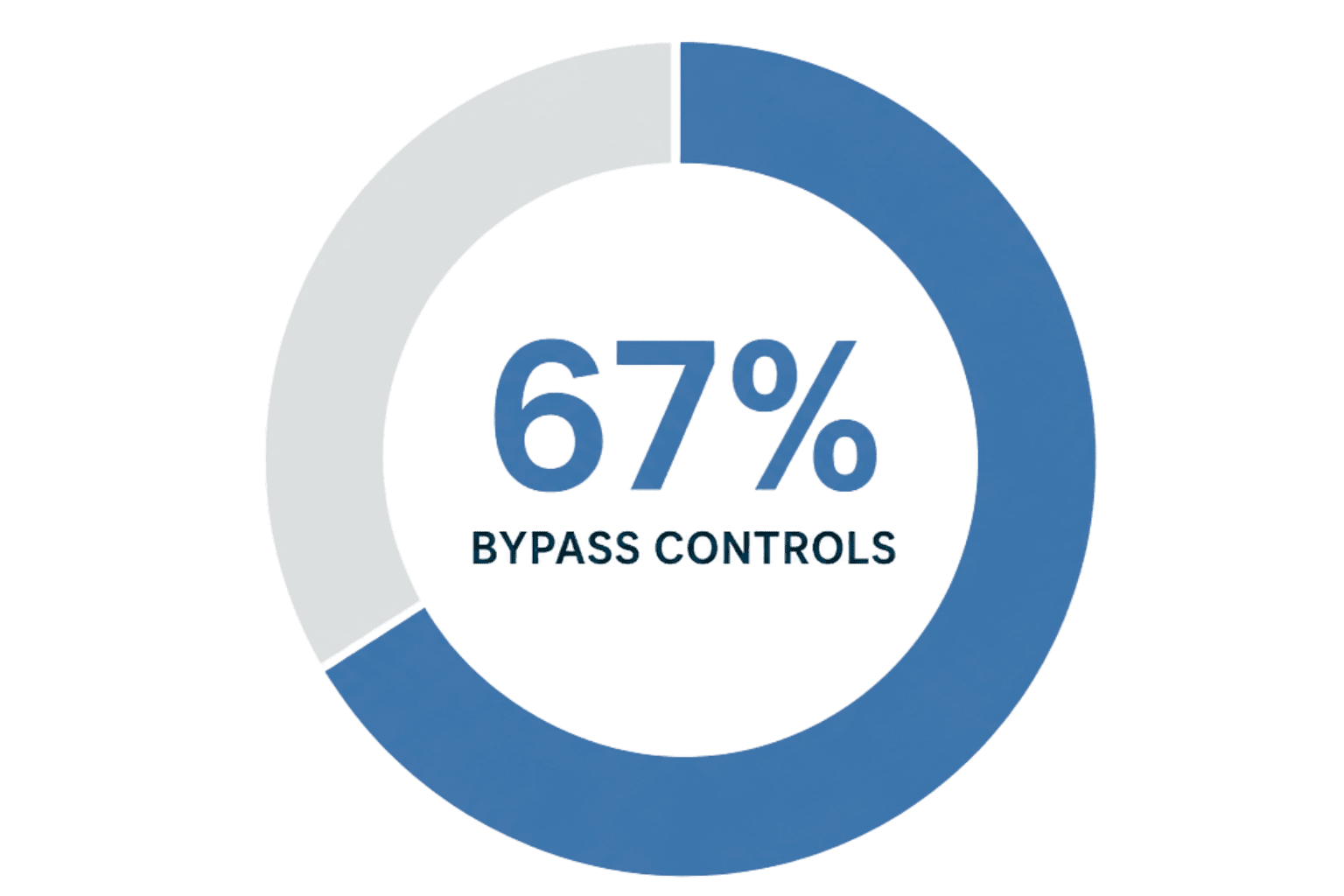
67% of Employees Admit They Bypass Company Policies or Controls
Nearly 67% of employees admitted they at least sometimes bypass company policies or controls to get work done more efficiently.
Younger workers were significantly more likely to report:
The study also found a direct relationship between frustration and workaround behavior:
the more restricted employees felt, the more likely they were to bypass systems.
This is becoming increasingly important as employees work across:
The findings suggest many organizations are still treating this as a policy problem when it is increasingly becoming a workflow design problem.
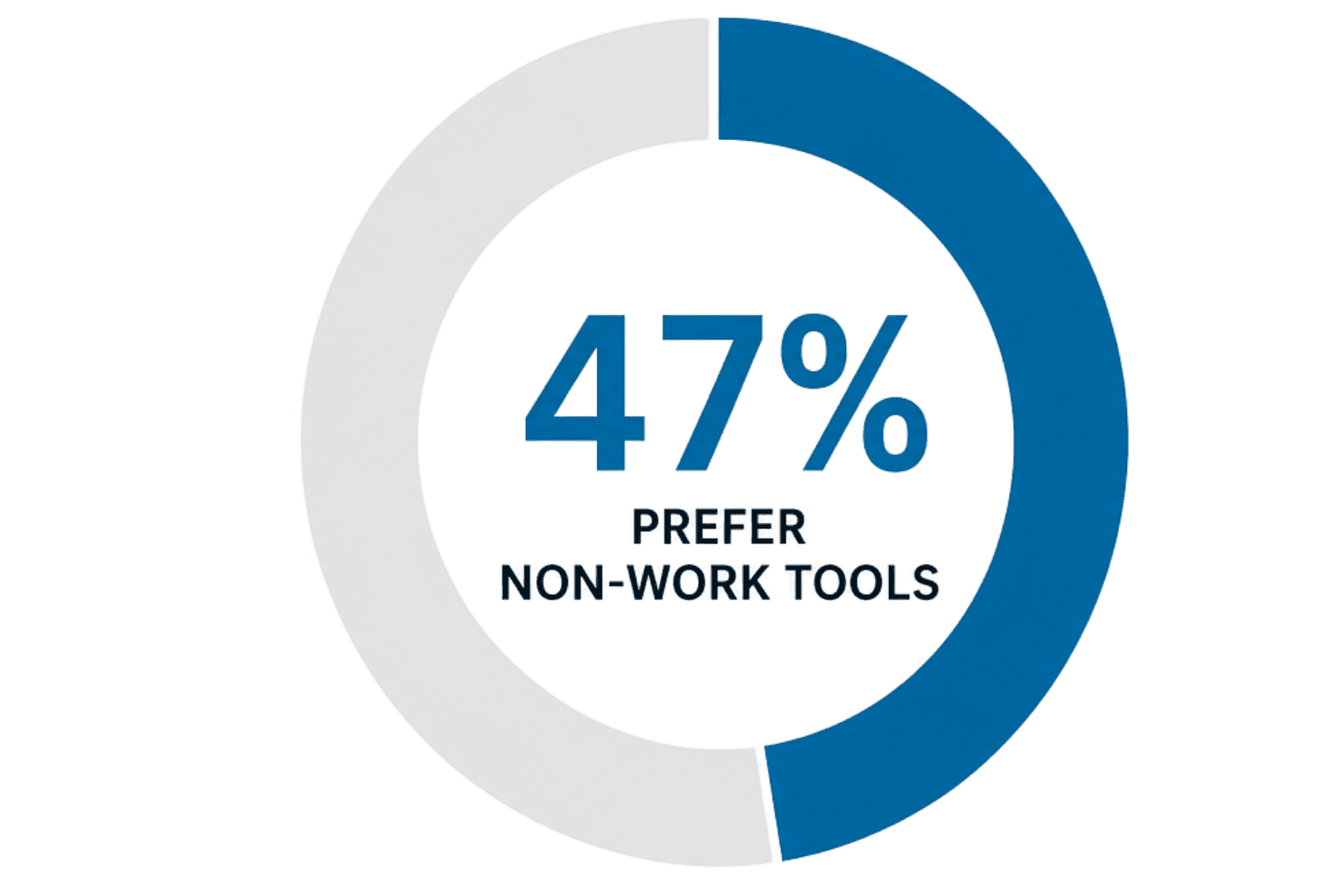
47% Say Non-Work Tools Are More Efficient Than Company Systems
Nearly half of employees surveyed said personal email, consumer messaging apps, and non-work file-sharing tools are often more efficient than the systems provided by their employer.
Gen Z and younger Millennials reported the strongest preference for consumer-grade technology experiences.
Younger employees consistently showed:
This expectation gap is widening rapidly as AI tools become more accessible.
Employees can now summarize meetings, automate repetitive tasks, and generate content faster than many organizations can govern the process.
The gap between official workflows and actual employee behavior is growing.
Younger Employees Were Nearly Twice as Likely to Need Multiple Onboarding Support Interactions
One of the more surprising findings in the study involved onboarding complexity.
Younger Millennials and Gen Z employees reported the highest onboarding support needs of any generation surveyed.
Nearly half of younger employees required multiple IT support calls or tickets before becoming fully productive.
Today’s workers must navigate:
The findings suggest younger employees are not necessarily less technical.
Instead, they expect workplace systems to feel simpler, more connected, and more intuitive.
Organizations that fail to modernize onboarding may struggle to create consistent productivity and employee experience at scale.
Frontline Workers Were Nearly 4x More Likely Than Executives to Report Not Using AI Regularly
One of the clearest workforce divides in the study involved AI adoption.
Managers and executives reported dramatically higher levels of AI usage and AI value than frontline employees.
Frontline workers also reported:
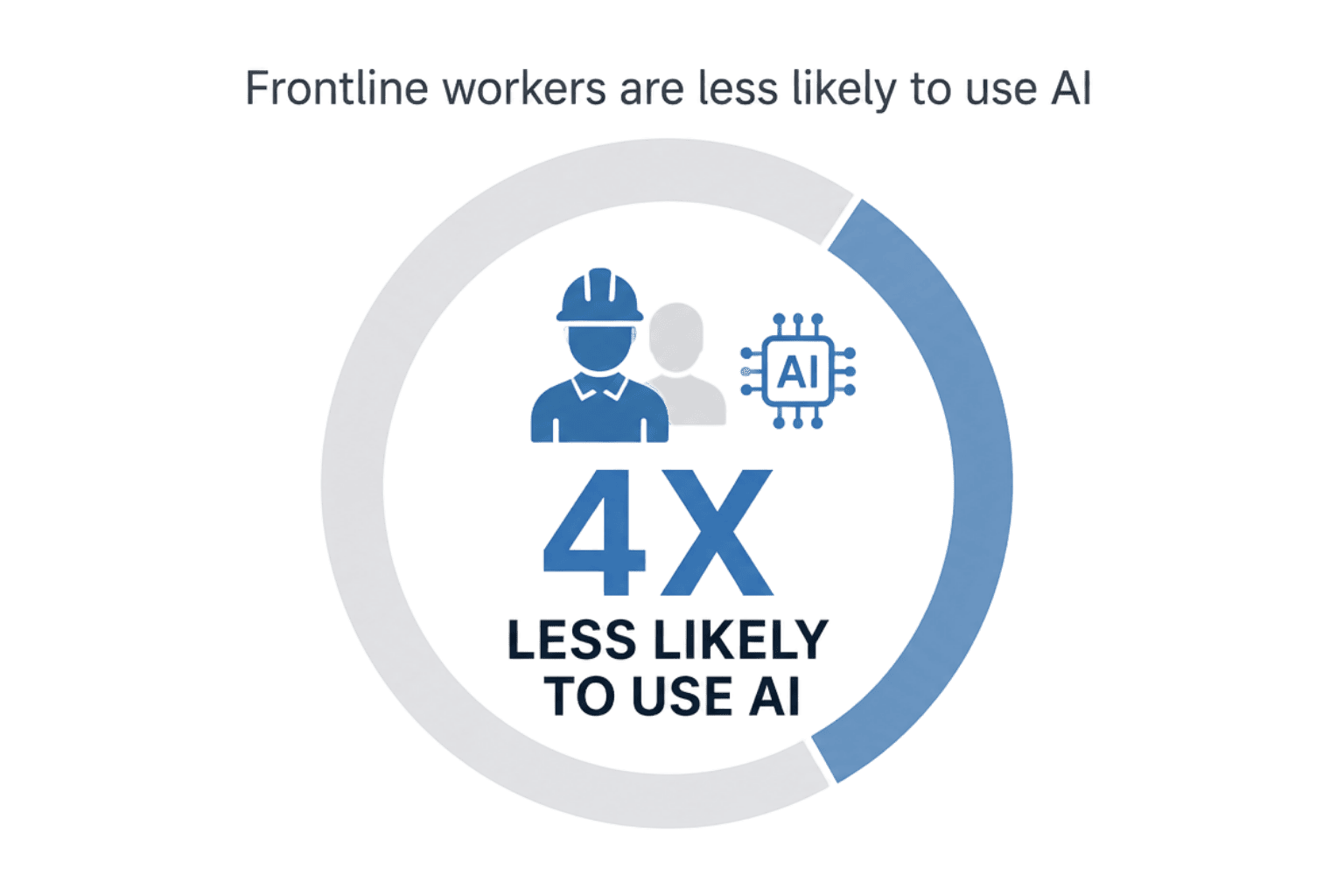
This may become one of the defining operational challenges of the next several years.
Most AI conversations today focus heavily on executives and knowledge workers. But many frontline environments still lack:
Organizations that fail to close this gap may create highly uneven AI adoption across the workforce.
Employees Receiving Role-Specific AI Training Reported Dramatically Higher AI Value
Employees receiving role-specific AI training reported significantly higher levels of productivity improvement and practical business value from AI tools than employees receiving little or no AI training.
Workers receiving little AI guidance were far less likely to report:
The findings suggest AI success depends less on simply deploying tools and more on:
AI is not creating entirely new workplace behaviors.
It is accelerating behaviors that already existed.
Employees already wanted:
AI dramatically increases the ability to achieve those outcomes.
Younger workers are often the first to normalize these behaviors because they are more comfortable experimenting with new tools quickly and informally.
Younger Workers Continue to Signal Where Workplace Expectations Are Headed
The study found younger workers consistently demonstrated:
Many workplace behaviors that once seemed unusual eventually became standard:
The same pattern is now emerging with AI.
Gen Z workers are not simply adapting to the modern workplace.
In many ways, they are quietly redesigning it.
Organizations that recognize these patterns early will likely adapt faster than organizations still trying to force employees back into older models of work.
If you want to predict the future of work, study the youngest generation entering the workforce.
Because many of the behaviors shaping the next era of work are already visible there today.
DOWNLOAD THE 2026 ENDPOINT ECOSYSTEM STUDY

Andrew Reade
Andrew is our Digital Marketing Manager and oversees web-based marketing strategies and content creation for the organization. As a marketing veteran, Andrew has worked with organizations of all sizes in a diverse group of industries, from Risk Management to Transportation. Joining the organization in 2021, Andrew is based in Mobile Mentor’s Nashville, TN office.