

Microsoft 365 has evolved far beyond email and productivity software. Today, it serves as the foundation for identity, endpoint management, security, collaboration, compliance, and AI across modern businesses.
As Microsoft’s cloud ecosystem continues to expand, many internal IT teams find it challenging to keep pace with new features, security recommendations, and licensing changes while also supporting day-to-day operations. That’s why many businesses turn to a Microsoft 365 Managed Services Provider (MSP).
The right partner can help improve security, simplify management, reduce operational overhead, and ensure you’re getting the most value from your Microsoft investment.
If you’re evaluating providers, here are seven qualities to look for.
1. Microsoft-Focused Expertise
Not every managed service provider specializes in Microsoft technologies.
Some offer broad IT support across dozens of vendors, while others build their services around the Microsoft ecosystem. If Microsoft 365 is central to your business, look for a provider with deep expertise in services like:
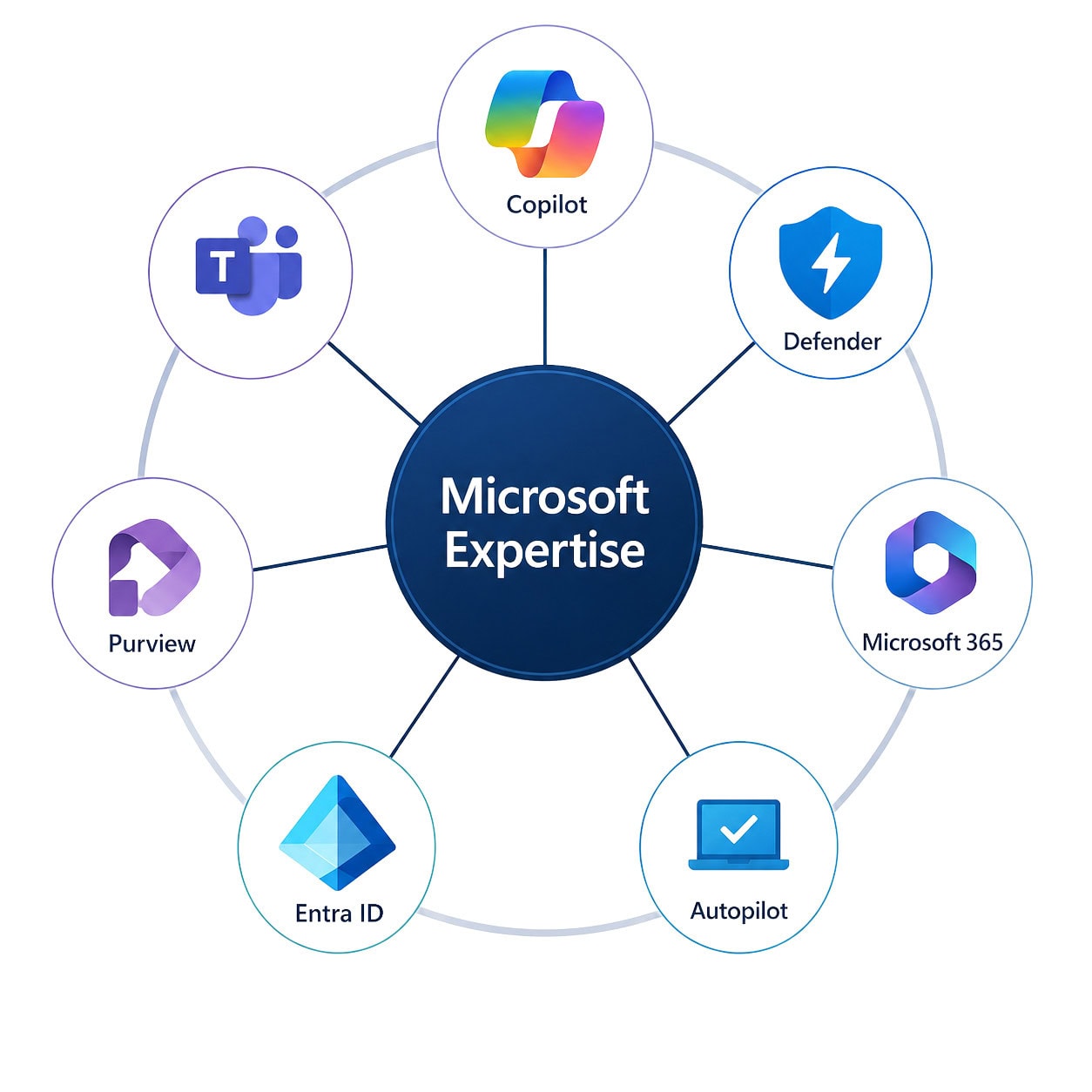
A Microsoft-focused partner is more likely to stay current with Microsoft’s roadmap, best practices, and licensing changes, helping you take advantage of new capabilities as they become available.
2. A Proactive Approach to Security
Cybersecurity isn’t something you configure once and forget.
Microsoft regularly introduces new security features and recommendations, and attackers constantly evolve their tactics. Your managed services provider should continuously monitor and improve your environment rather than simply responding when something goes wrong.
Look for services that include:
Security should be an ongoing process, not a one-time project.
3. Modern Device Management
Managing devices today looks very different than it did just a few years ago.
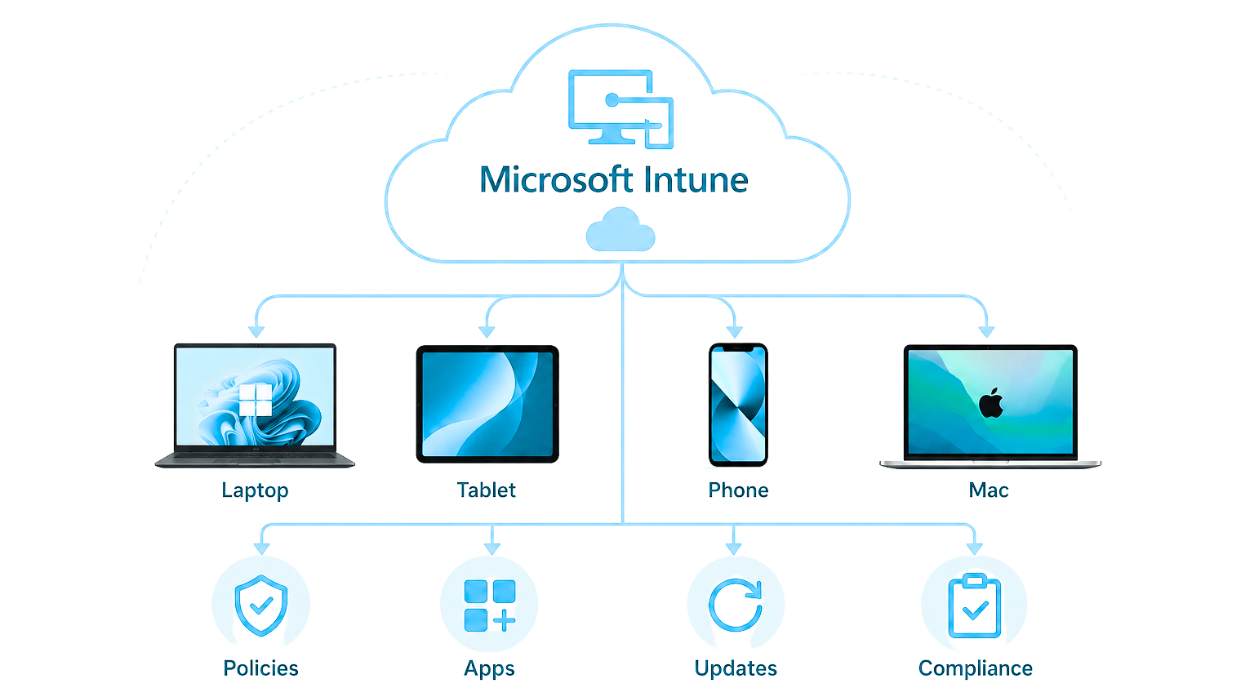
Employees work from home, travel frequently, and expect secure access from multiple devices. A modern managed service should support cloud-native endpoint management rather than relying on traditional imaging, VPNs, or on-premises infrastructure.
Key capabilities include:
4. Guidance on AI and Microsoft Copilot
AI is quickly becoming part of the Microsoft 365 experience, but successful adoption requires more than purchasing licenses.
Businesses should understand:
A managed services provider should help you prepare your Microsoft 365 environment for AI, not just support it after deployment.
5. Licensing and Cost Optimization
Microsoft licensing can be complex, and it’s constantly changing.
A knowledgeable provider should help ensure you’re purchasing the right licenses, eliminating unused subscriptions, and taking advantage of capabilities already included in your existing plans.
Regular licensing reviews can uncover opportunities to:
Understanding what’s included in Microsoft 365 E3, E5, E7, and Intune licensing has become increasingly important as Microsoft continues to expand these offerings.
Related reading: Intune Licensing in 2026
6. Strategic Planning
Good managed services providers solve technical issues.
Great providers help businesses plan for what’s next.
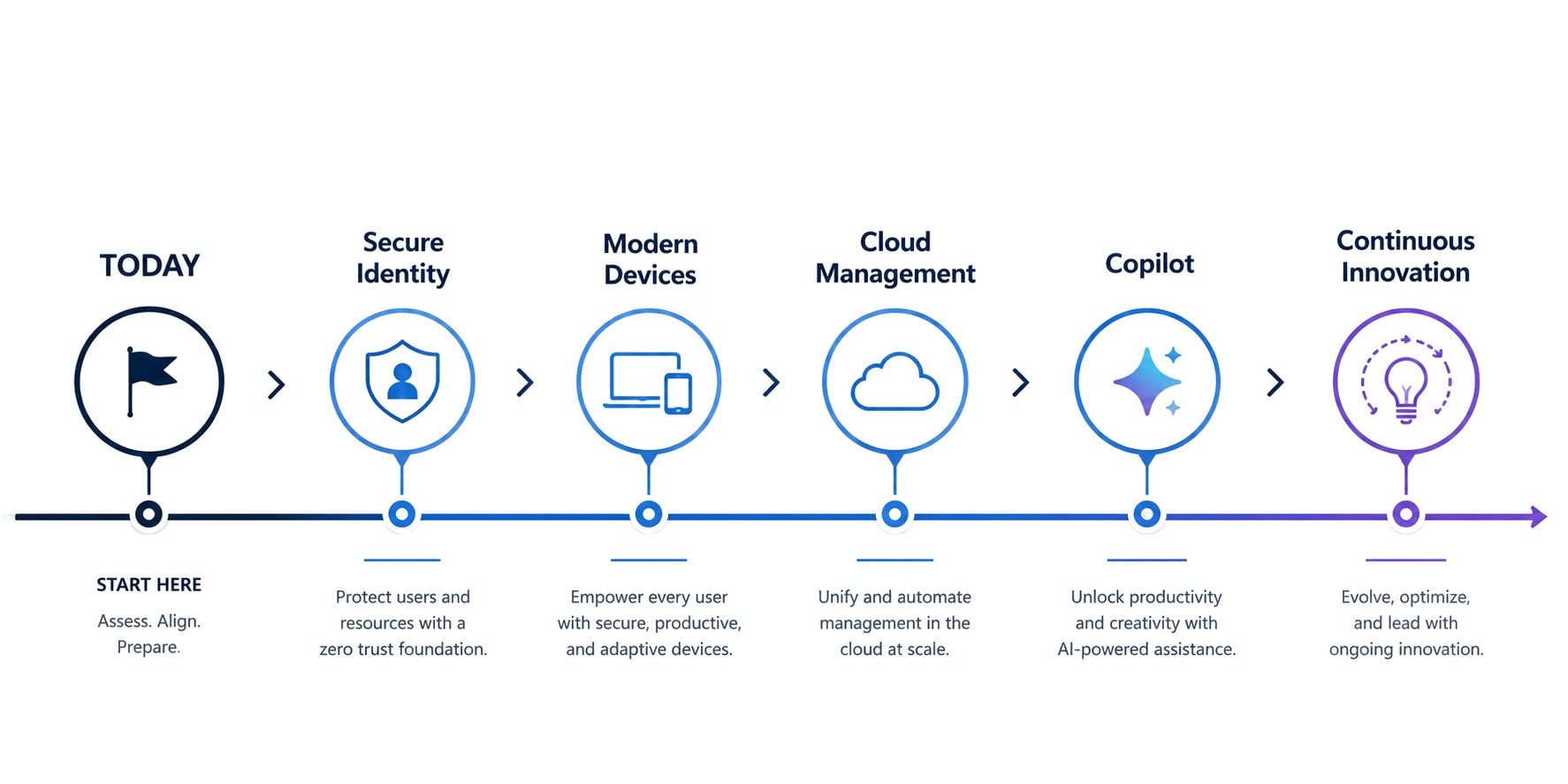
That includes guidance on:
Rather than simply closing support tickets, they act as a strategic advisor who helps align technology decisions with business goals.
7. Clear Reporting and Measurable Results
Your managed services provider should demonstrate the value they’re delivering.
Regular reporting can provide insight into:
These metrics help IT leaders measure progress and prioritize future investments instead of relying on reactive support alone.
Questions to Ask Before Choosing a Microsoft 365 Managed Services Provider
Before signing an agreement, consider asking prospective providers questions like:
The answers can reveal whether a provider is simply maintaining your environment or actively helping it improve.
Choosing the Right Partner
Every business has different IT requirements, but the best Microsoft 365 managed services providers share several characteristics: deep Microsoft expertise, a proactive security mindset, modern endpoint management capabilities, strategic guidance, and a commitment to continuous improvement.
When evaluating providers, look beyond help desk response times and consider how they’ll help your business maximize the value of Microsoft 365 over the long term.
If you’re already invested in Microsoft’s ecosystem, choosing a partner with specialized Microsoft expertise can help you improve security, simplify management, and stay ahead of new technologies like Microsoft Copilot.
Get in Touch With the Mobile Mentor Team to Learn More

Andrew Reade
Andrew is our Digital Marketing Manager and oversees web-based marketing strategies and content creation for the organization. As a marketing veteran, Andrew has worked with organizations of all sizes in a diverse group of industries, from Risk Management to Transportation. Joining the organization in 2021, Andrew is based in Mobile Mentor’s Nashville, TN office.